Warmfall
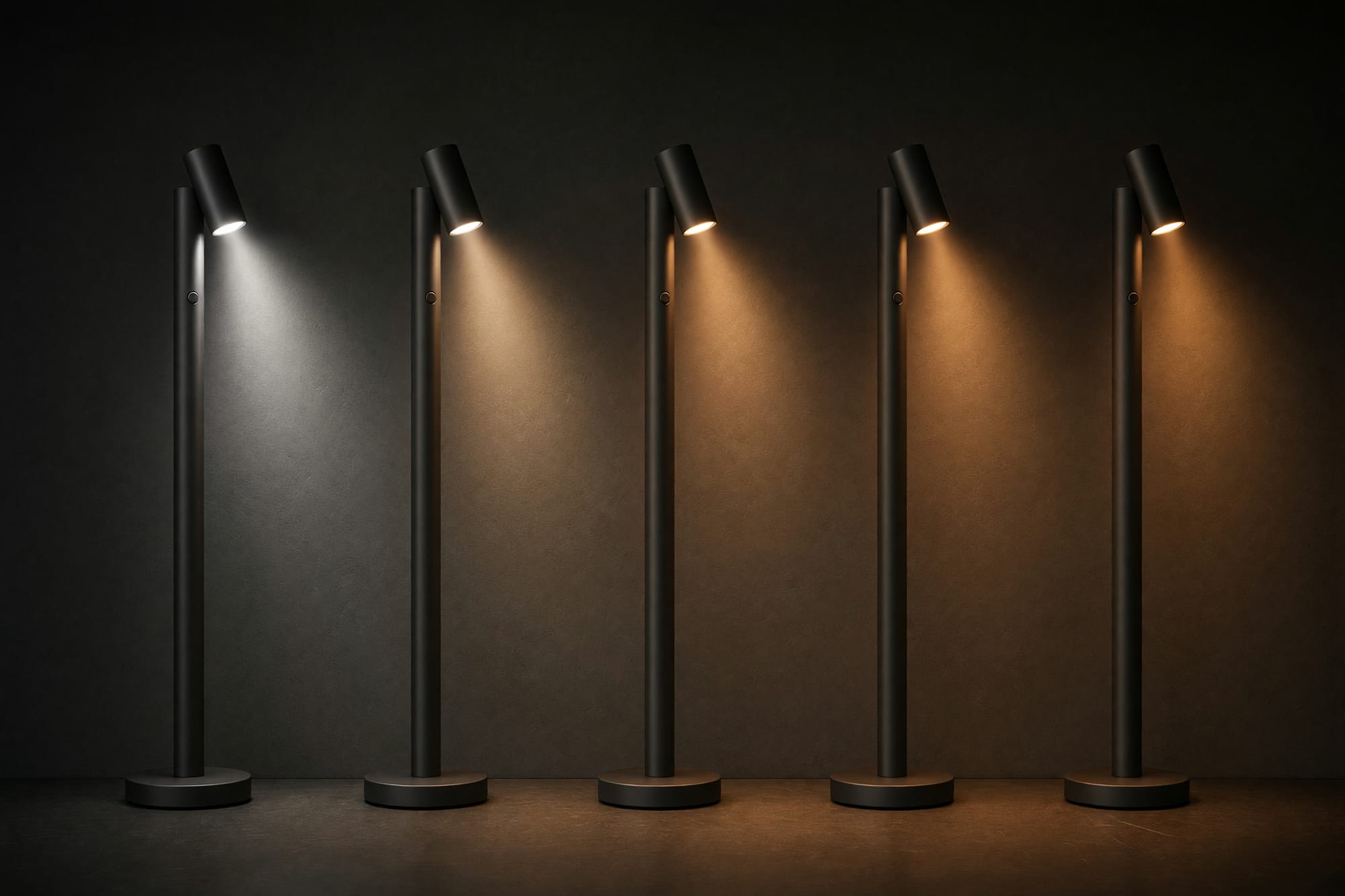
Output and colour fall together, so the light warms as it goes down. At full the lamp is 3,000 Kelvin. At the bottom of its range it is 1,800, which is roughly candlelight. The curve is deliberately not a straight line. It warms slowly through the top half of the range, where you are mostly still working, and quickly through the bottom, where you are mostly not. A linear fall feels wrong in a way people notice and cannot name: the colour arrives too early, and the room goes orange while you are still reading.
Steadystate
Most dimmers do not dim. They switch the light off and on many times a second and vary how long it stays off, and the average is what you see. It is cheap, it is efficient, and a proportion of people can see it — not as flicker exactly, but as a faint unease they will usually blame on being tired.
Spillguard
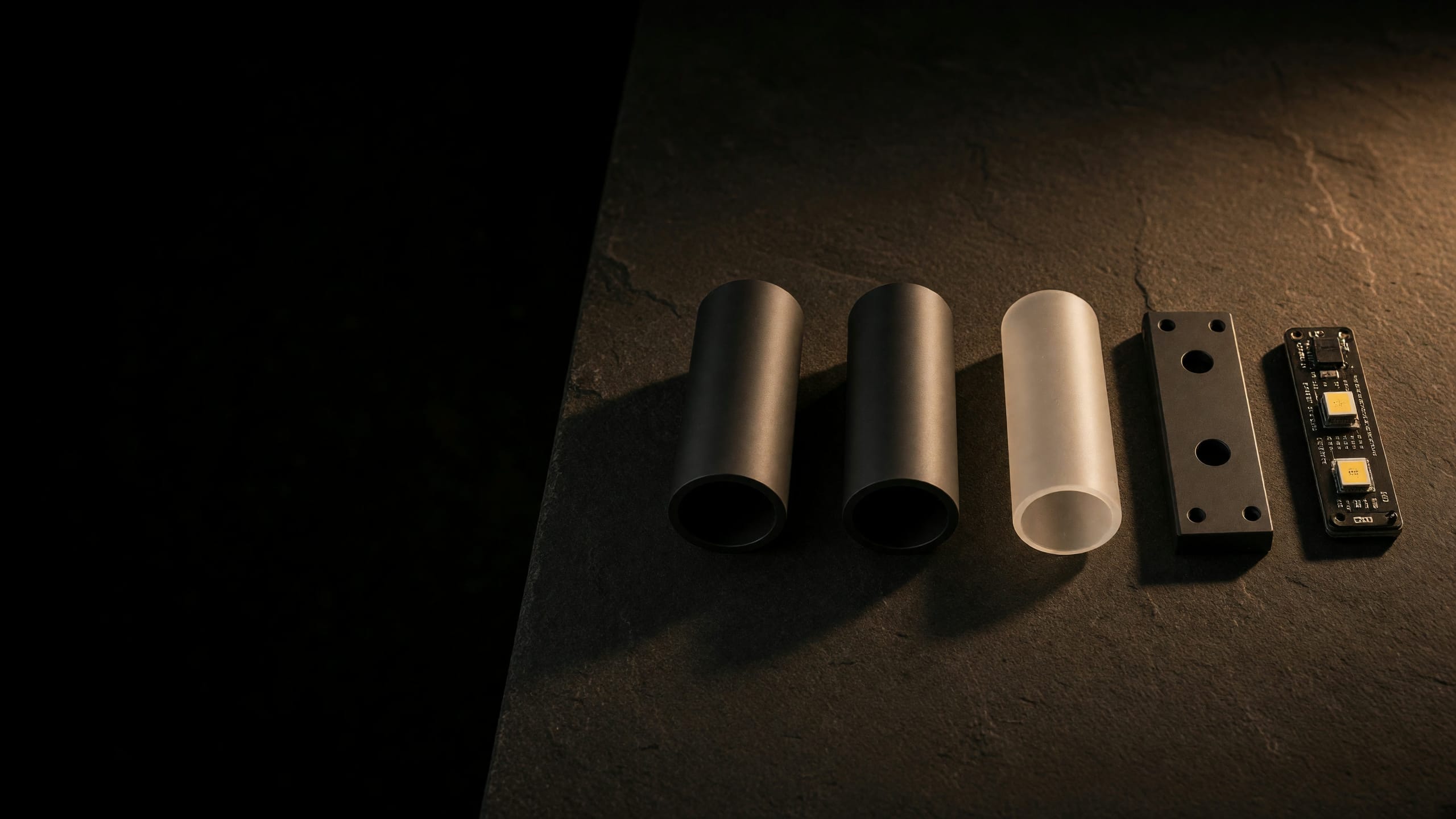
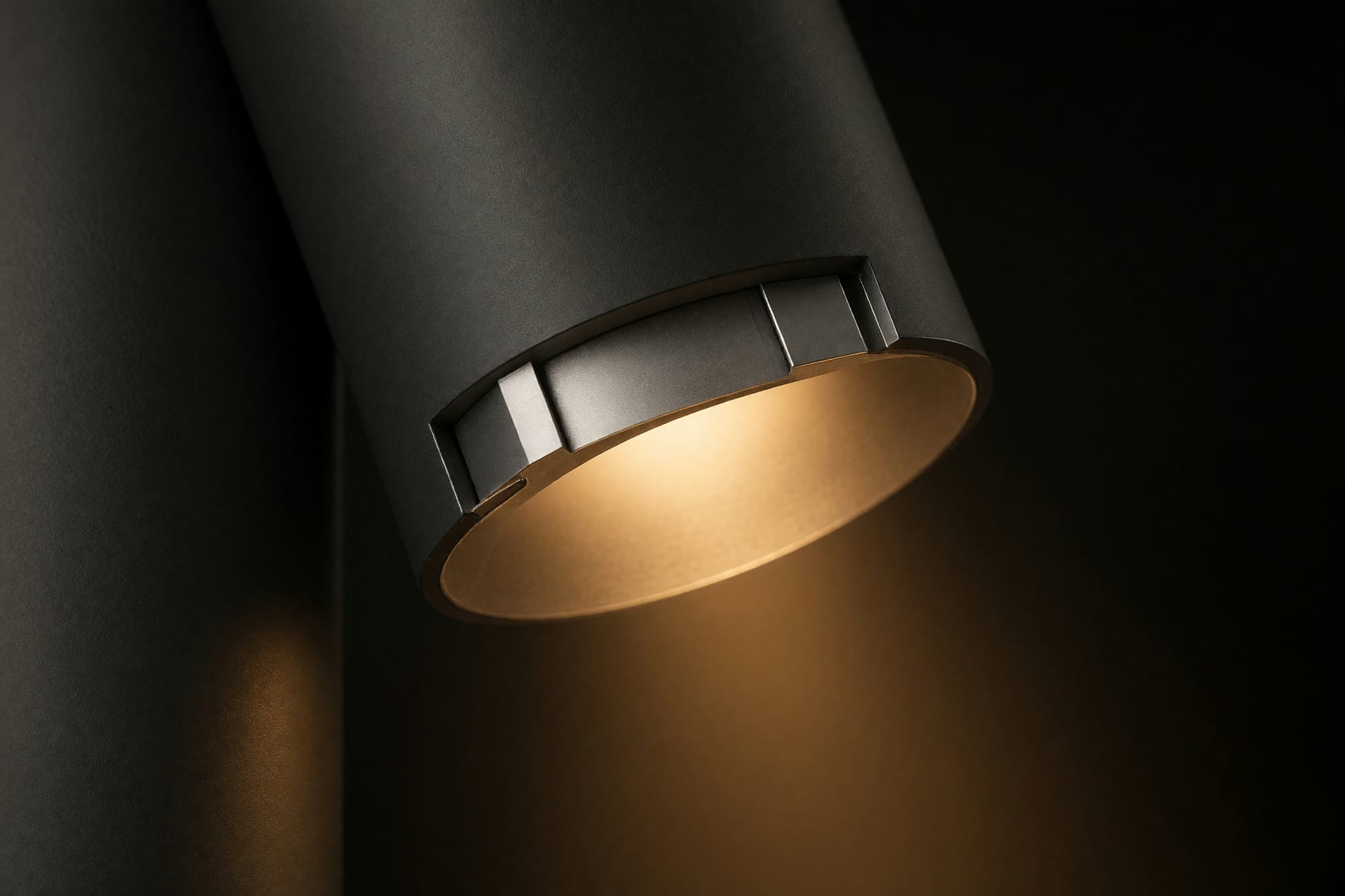
A baffle is a plate inside the lamp head that stops the part of the beam you did not ask for. Without one, a lamp lights its work surface and also the wall behind it, the ceiling above it, and a little of everything else — which is why a lit desk in a dark room almost always comes with a bright patch floating above it. With one, the light stops. You get a pool with an edge on it and a room that stays dark around it.
And then there is the app
Completely optional. But it makes the lamps smarter, tailored to your unique levels of photo sensitivity, and automatically adapts to your day-to-day rhythm.
Get on AppStore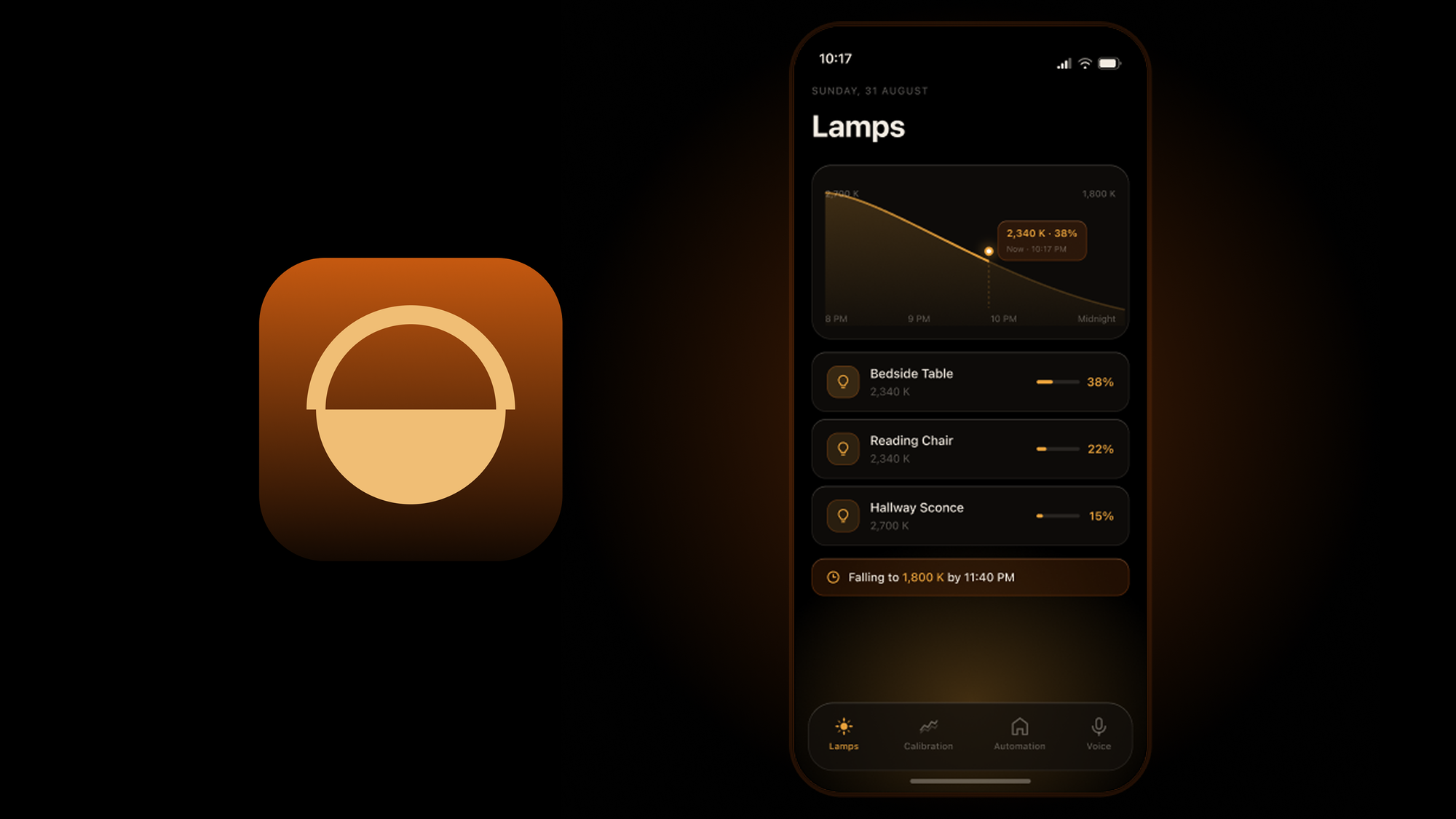
It falls on its own
Set an evening once and the lamps run it every night — output and colour temperature descending together toward 1,800K, without anybody opening anything. The app shows the curve and where in it you currently are.
Calibrated to you
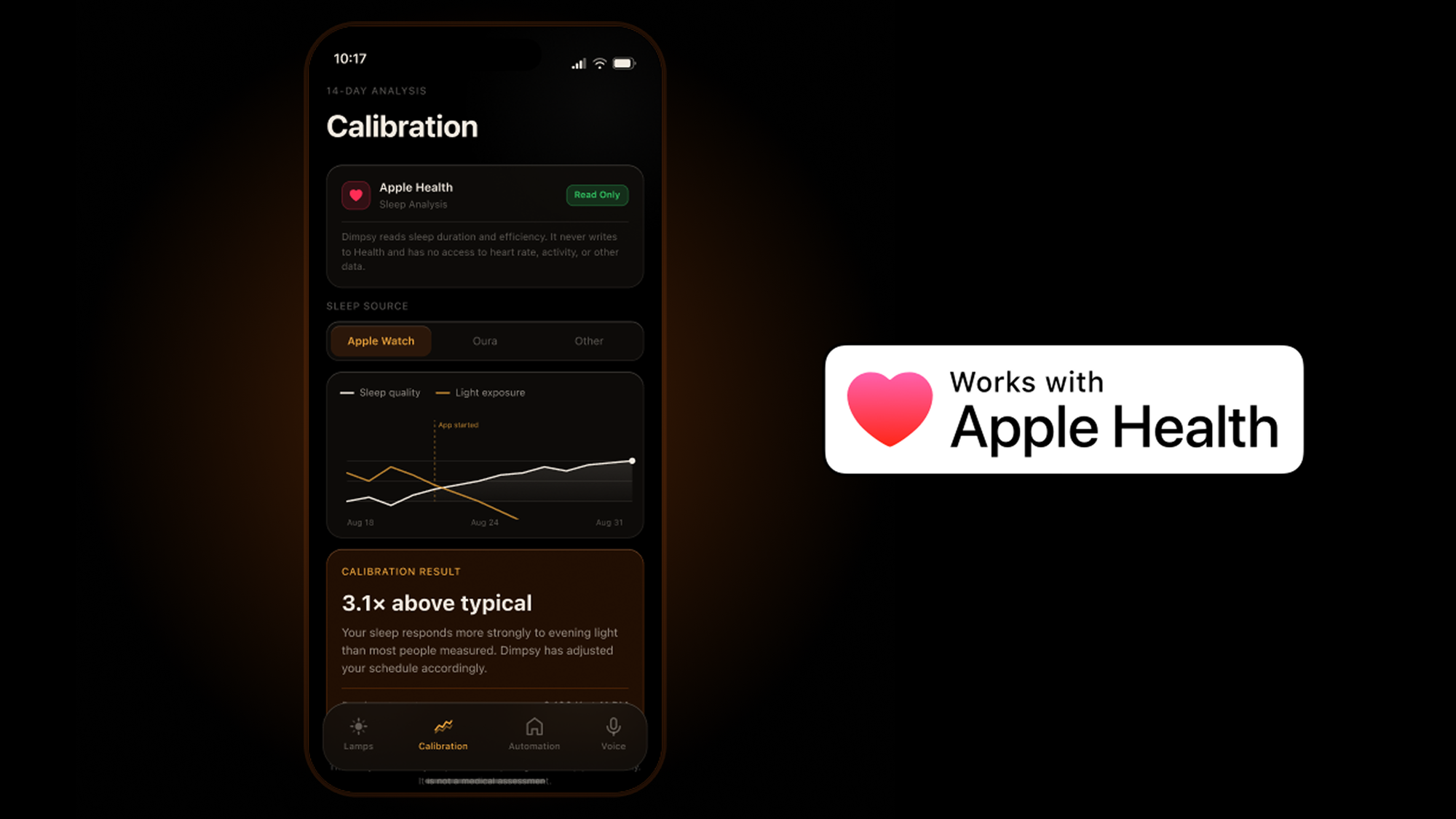
With your permission it reads sleep duration and efficiency from Apple Health and compares them against what the lamps actually did each evening. Sensitivity to evening light varies more than fiftyfold between people, so after about two weeks it moves your curve toward what your own eyes turn out to need.
It works with the rest of the house
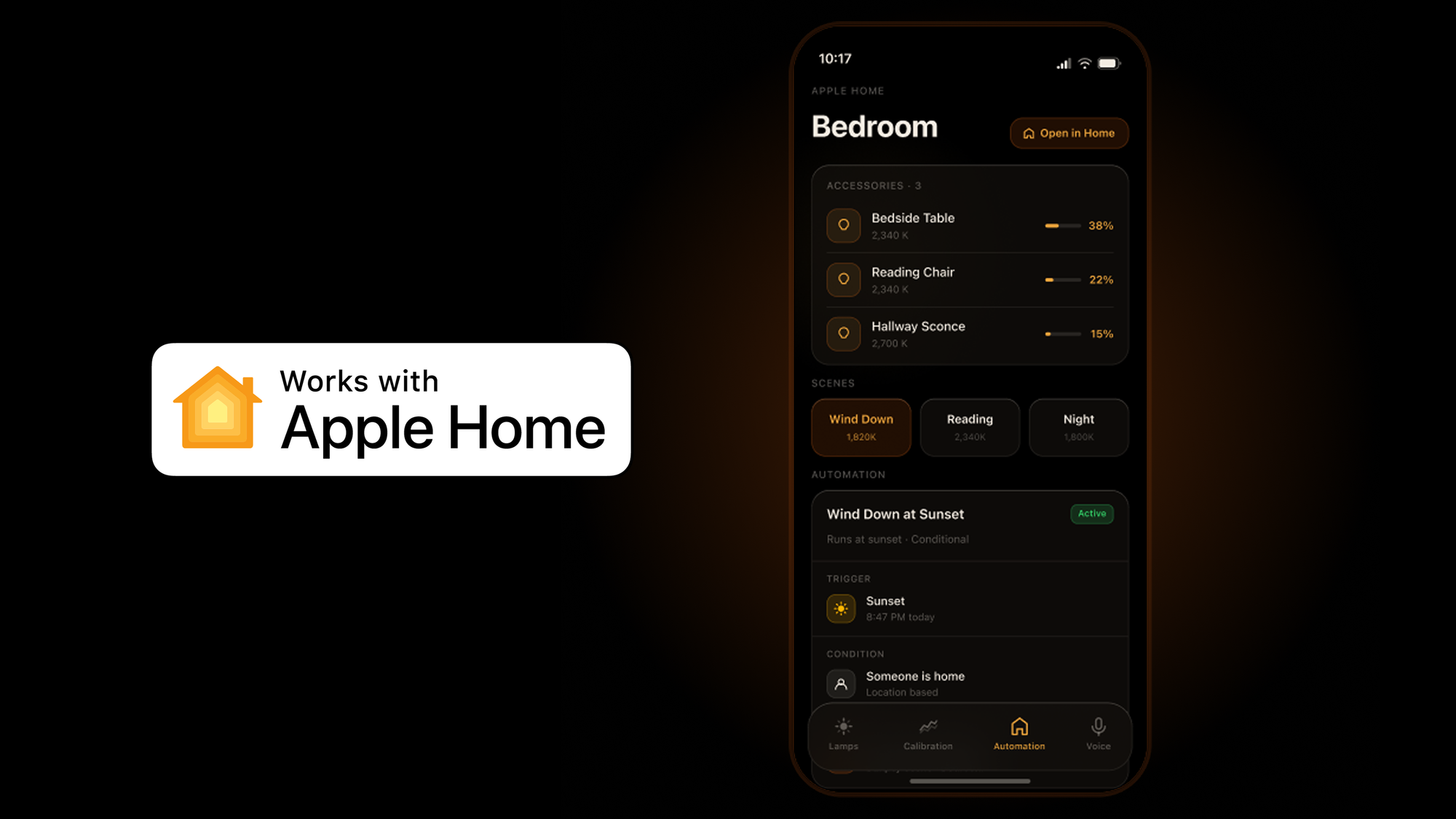
Every lamp appears in Apple Home as an accessory, in whichever room you put it. Scenes and automations are real HomeKit primitives — trigger, condition, scene — so the lamps take part in whatever the rest of your house already does at sunset.
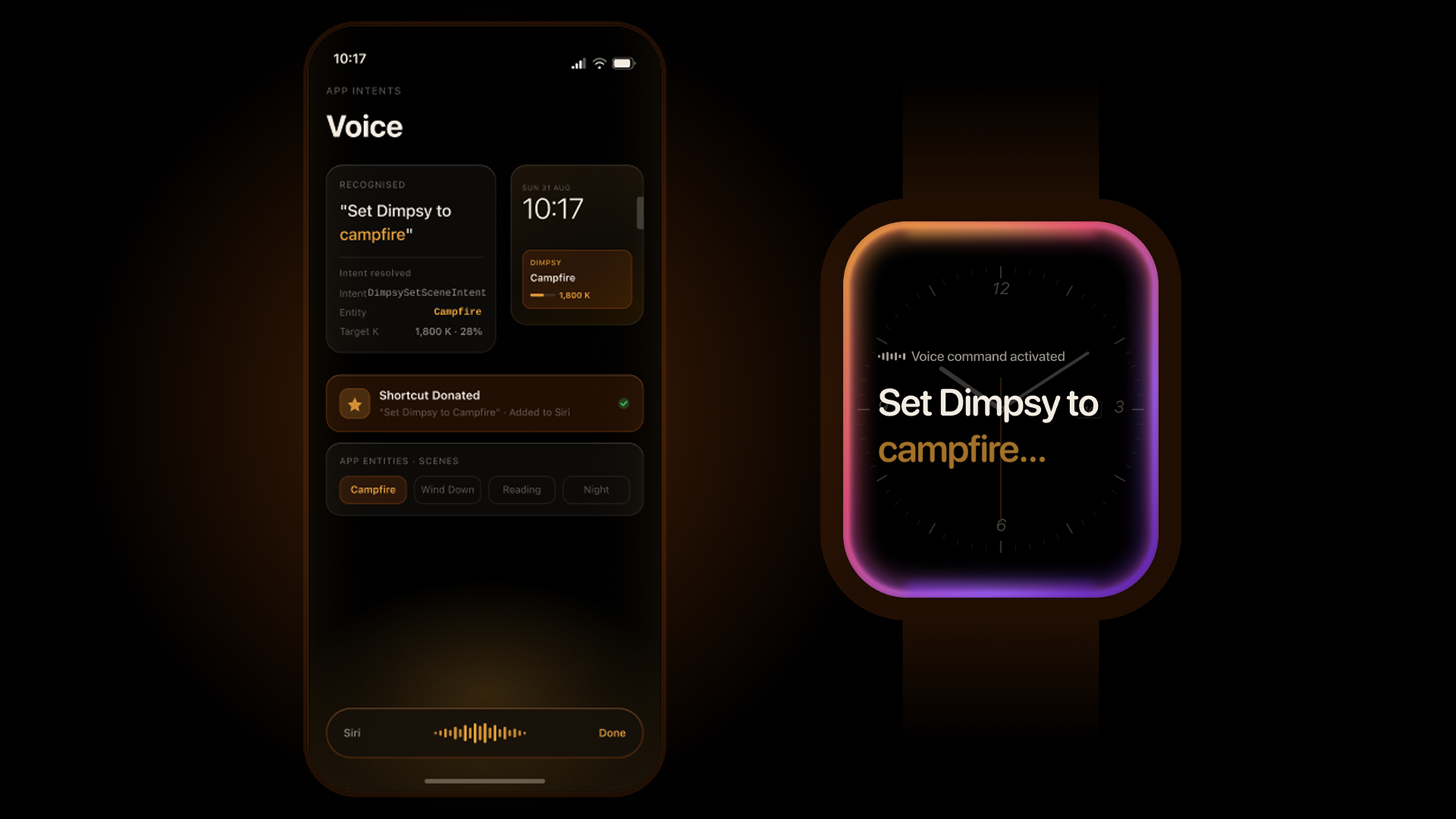
And it listens
Scene names are exposed to Siri as app entities, so "Set Dimpsy to campfire" resolves without opening anything. It works with Siri on any device, but best with Apple Watch, which is usually the nearest thing to hand at the point in the evening you want it.