
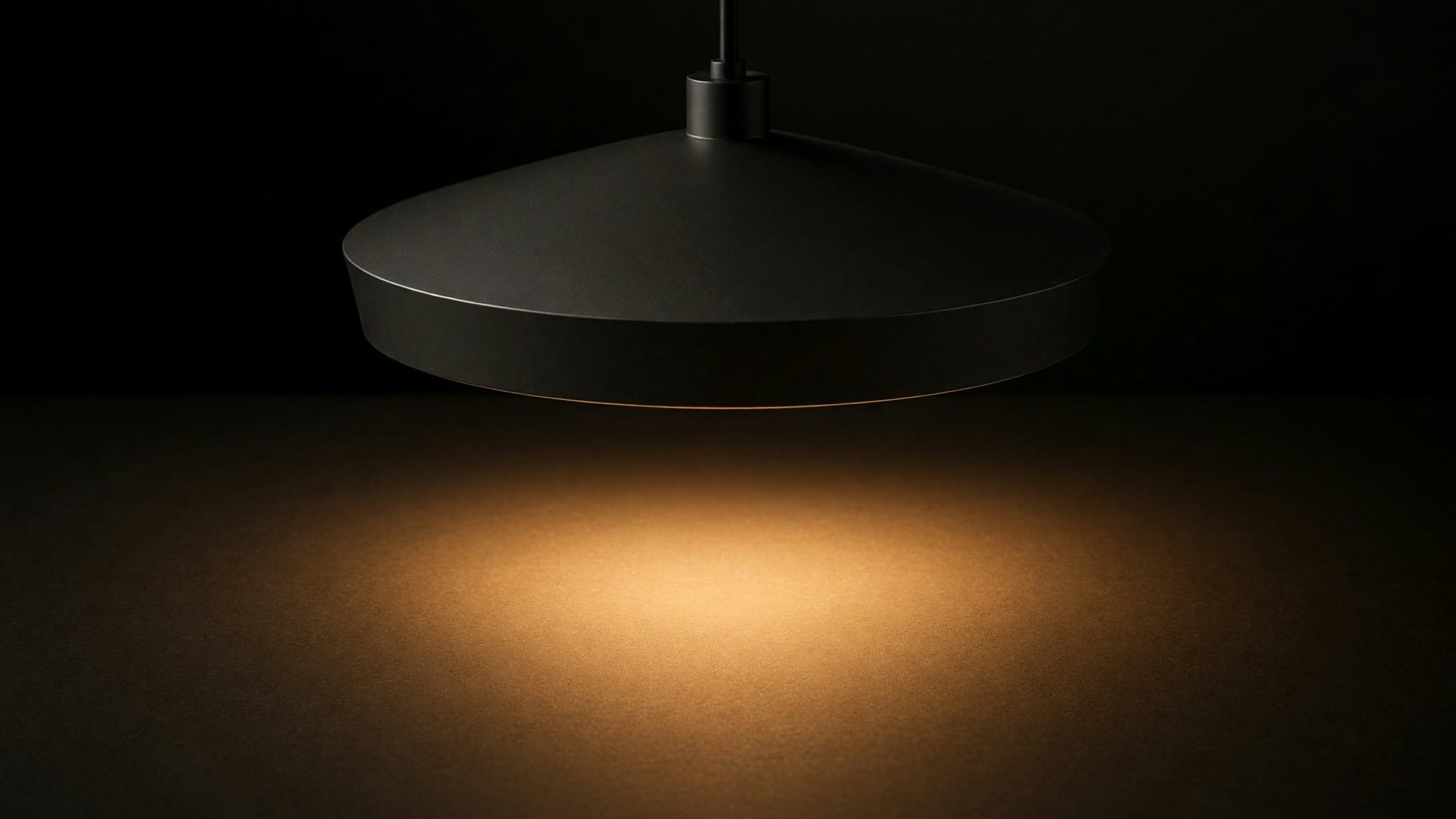
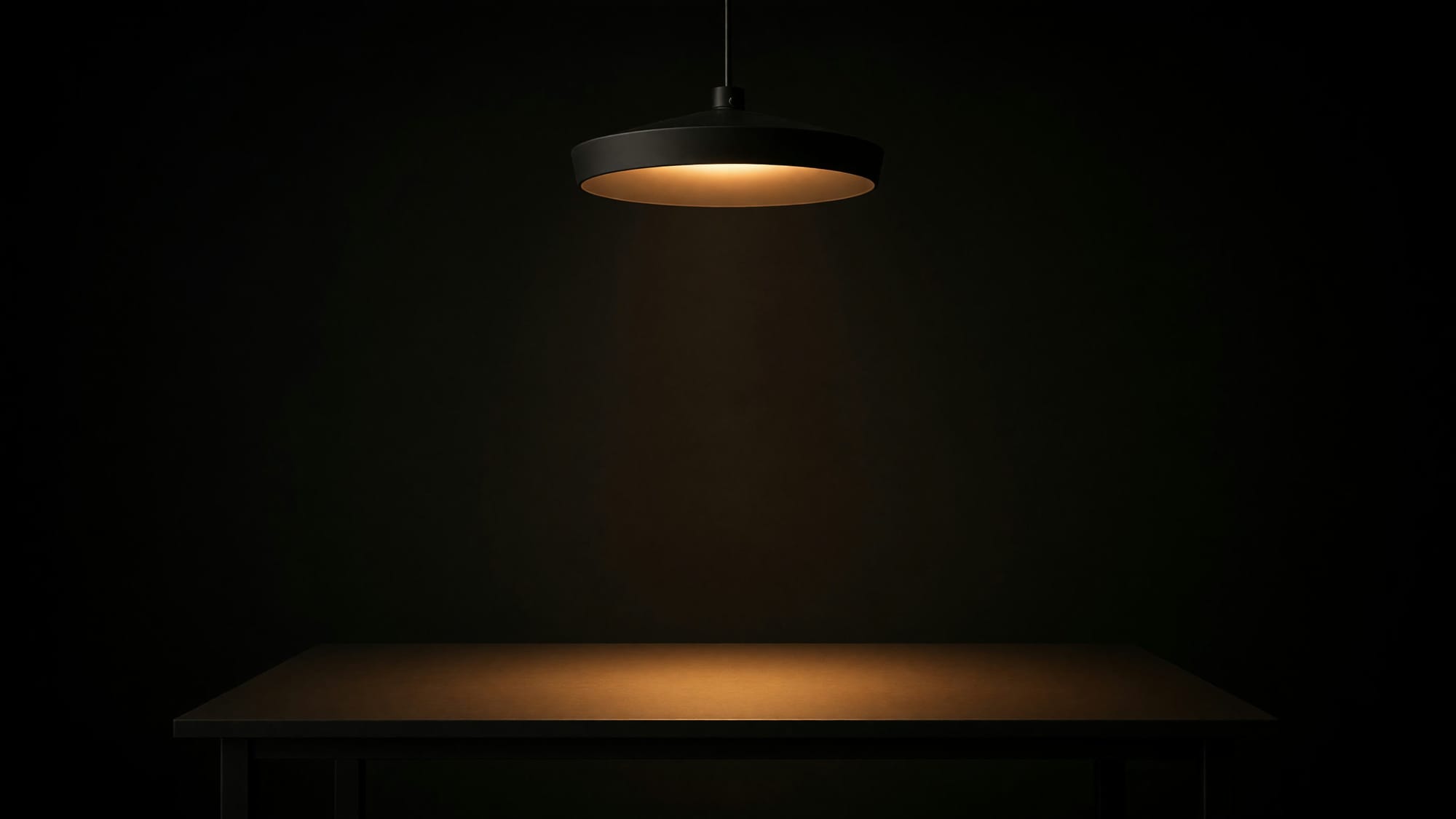
A pendant is the one ceiling fixture that can be forgiven, because a dining table is the rare surface where the thing being lit is the surface itself. Dimpsy Halo is a shallow inverted dish rather than a shade because a shade would throw light at the ceiling and the walls, which is precisely what makes a room at eleven feel like a room at three. It lights the table, the food and the people around its edge, and leaves everything beyond it alone.
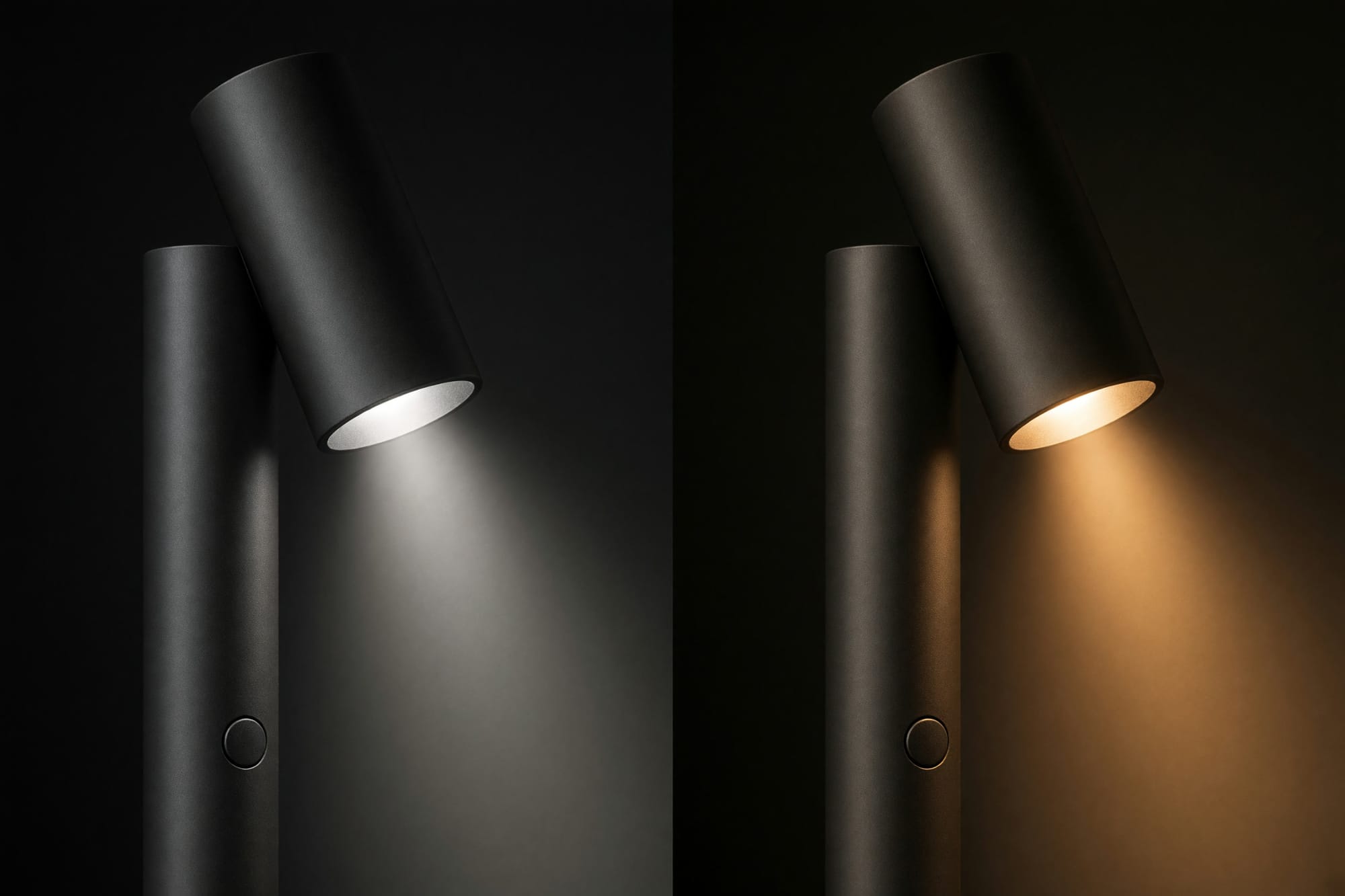
Warmfall
Output and colour temperature fall together on one control, from 3,000K down to 1,800K. The curve warms slowly through the top of the range, where you are still working, and quickly through the bottom, where you are not. Dinner moves through two or three registers in an evening, and this is the lamp that has to follow it. Bright and neutral while the food is being put out, deeply warm by the time the plates are pushed back and nobody wants to leave.
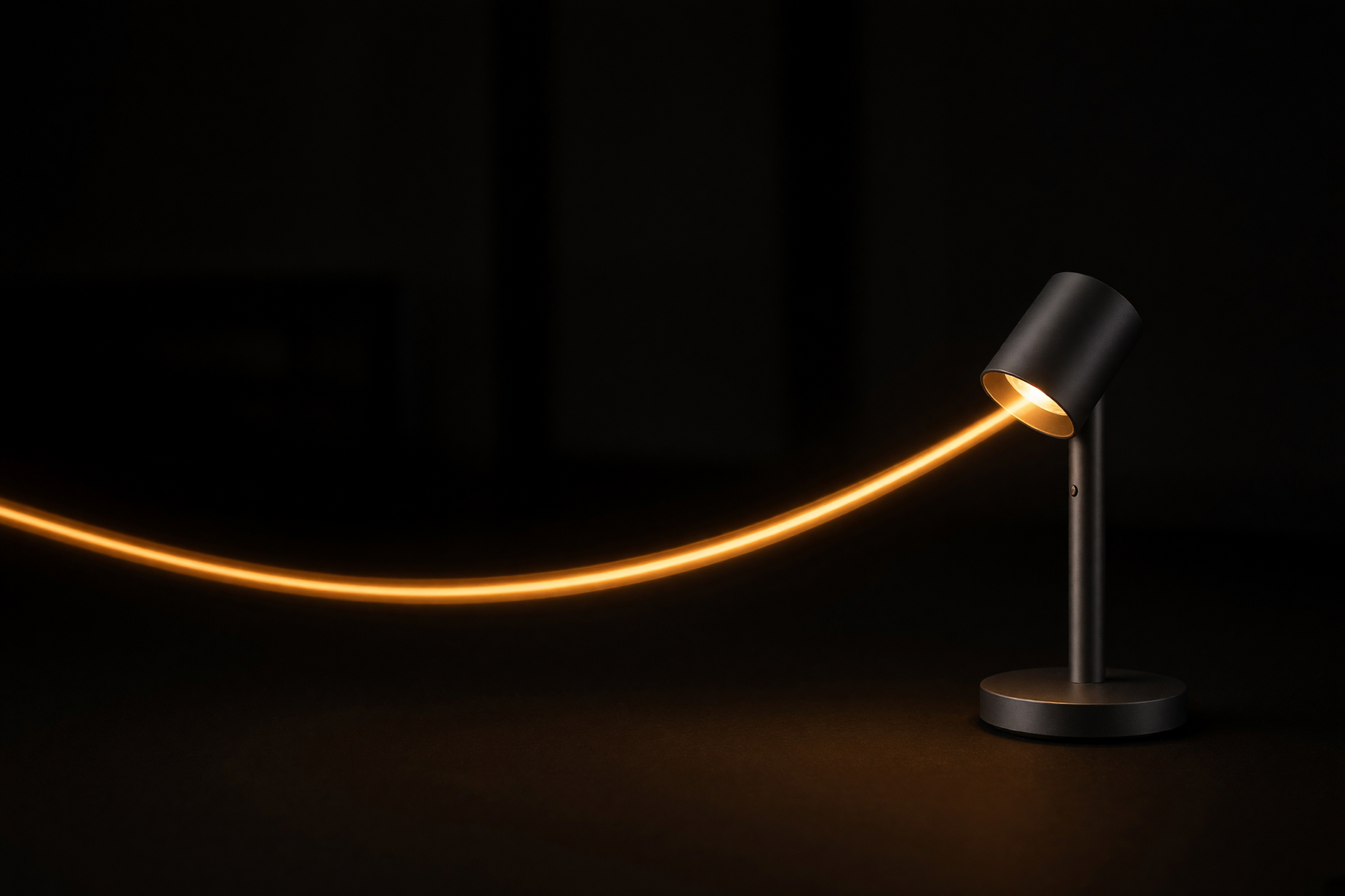
Steadystate
Most dimmers switch the light off and on very fast and call the average a level. A proportion of people see it — not as flicker exactly, but as a faint unease they blame on being tired. This lowers the current instead, and measures 0 Hz at every setting. Hung above a table the head is directly in the field of view of everyone sitting under it. Pulsed light from that position is the most noticeable it ever gets, and the least forgivable.
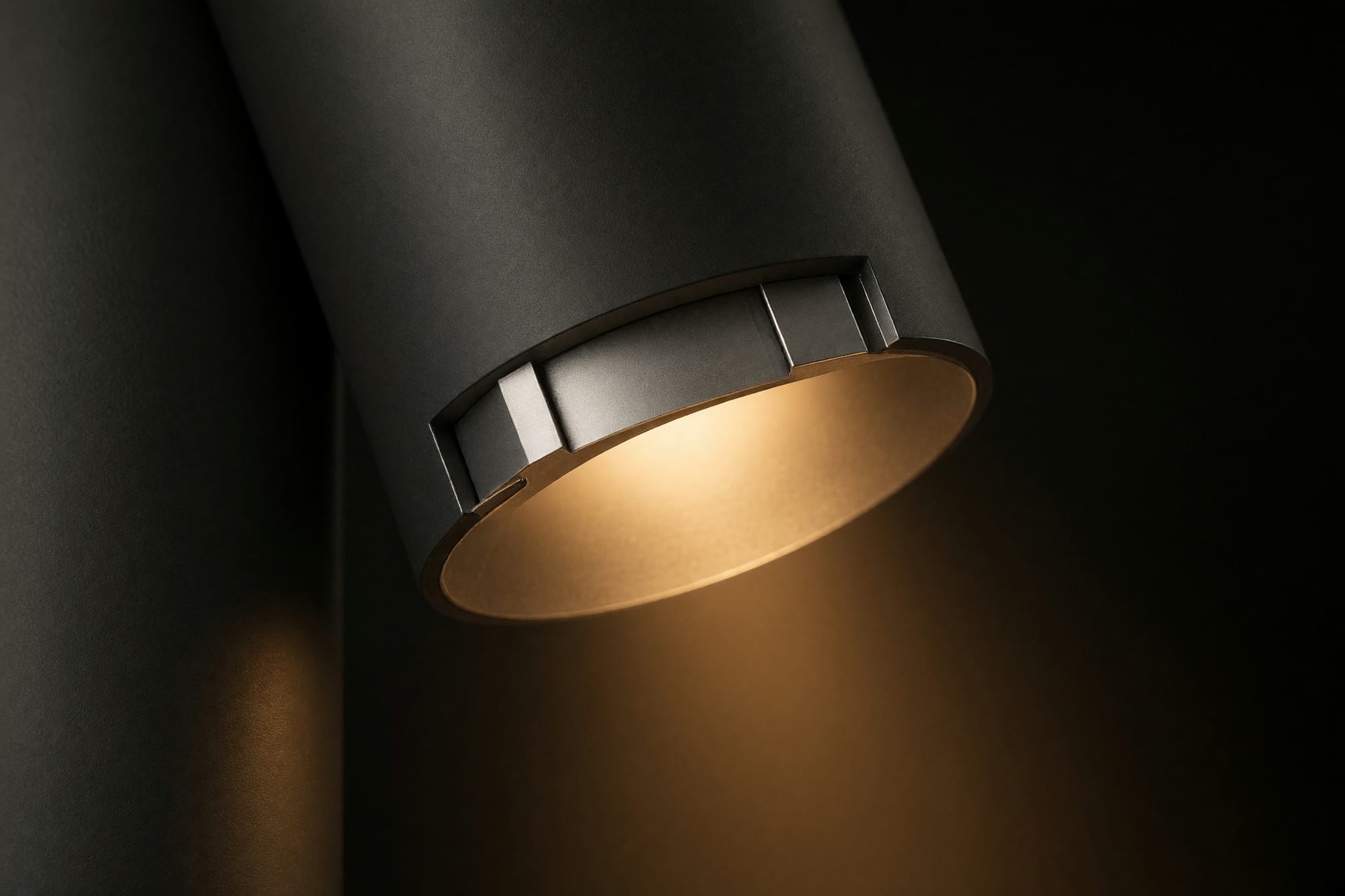
Spillguard
A plate inside the head stops the beam before it reaches the wall behind. What you get is a pool of light with an edge on it, rather than a general warming of the room and a bright patch above the desk. The baffle is what makes the circle on the table have an edge. Without it a pendant becomes a general room light hung low, which is a worse version of the ceiling fixture it replaced.
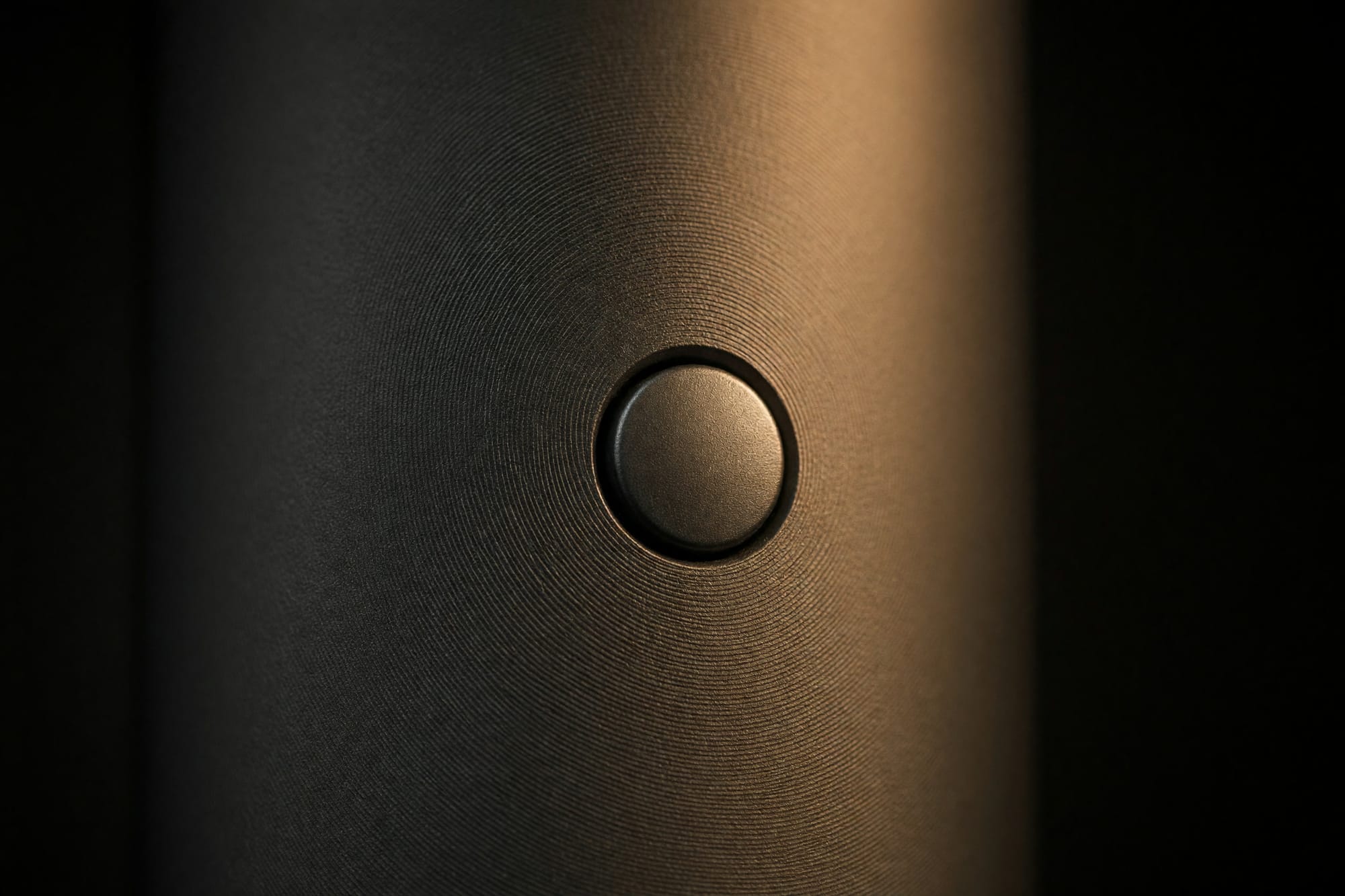
One button
Calibrated to you
The lamp runs its curve on its own. The app adds scheduling, Apple Home automation, voice control, and a calibration that reads your sleep from Apple Health and moves the curve toward what your own eyes turn out to need.
Get on App Store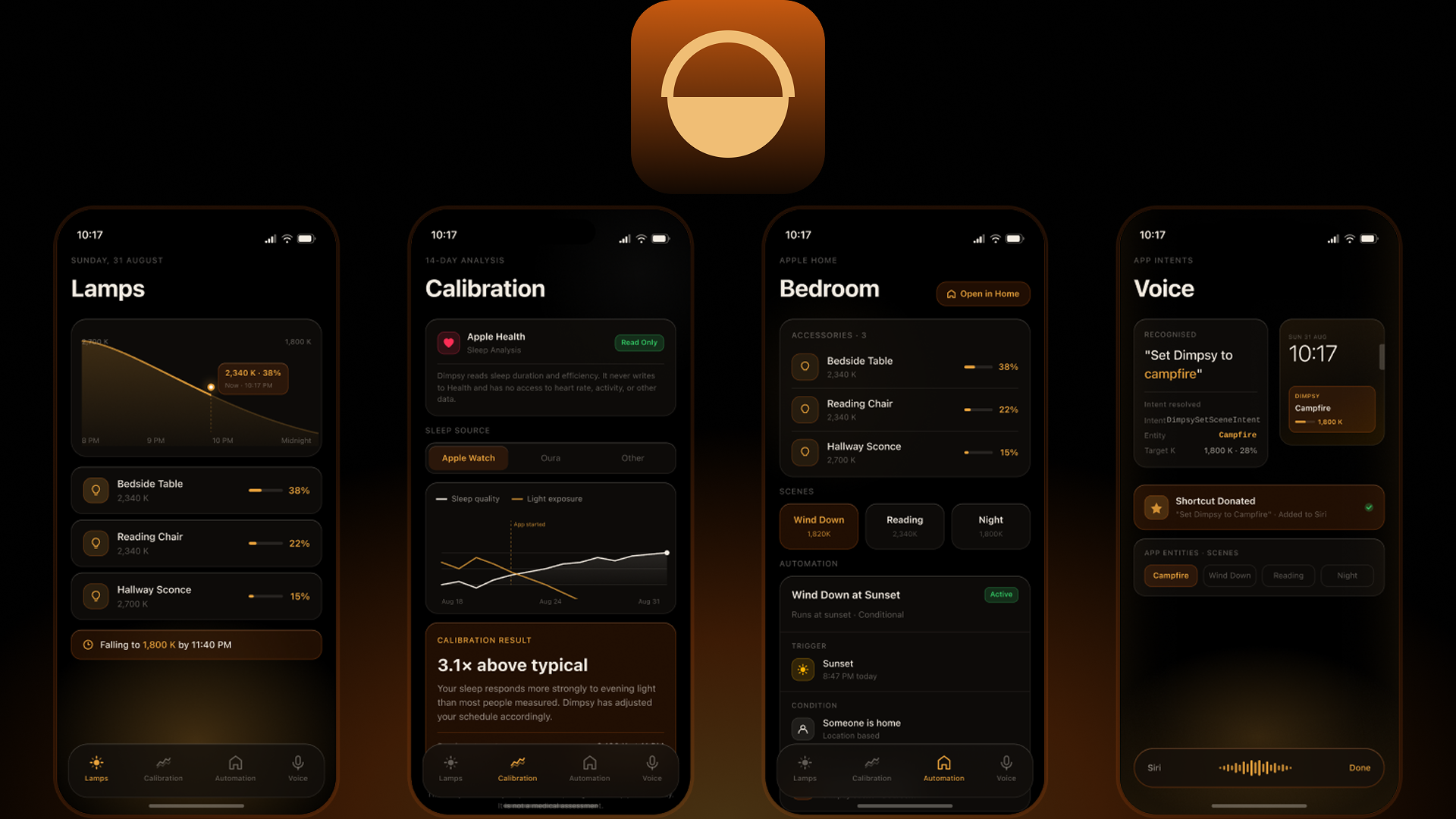
Specifications
| Height | 12 cm |
| Diameter | 38 cm |
| Cable | 200 cm, shortenable to 140 or 100 |
| Weight | 2.1 kg |
| Output | 540 lm at full |
| Warmfall range | 3,000–1,800 K |
| Colour rendering | 97 CRI |
| Flicker | 0 Hz at every setting |
| Beam angle | 44° |
| Power | 2–12 W |
| Mounting | Ceiling rose |
| Rated life | 50,000 h to L80 |
Questions
Why does it get more orange as it dims?
Because that is what the end of a day does, and because your eyes expect it. Below about 50 lux, cool light reads as clinical and warm light reads as evening. The longer version is on How it falls.
What is a Kelvin?
A measure of how warm or cool a light source is — lower is warmer. Candlelight is around 1,850 K, a domestic bulb is 2,700, an office ceiling is 4,000, and midday outside is about 5,500. It is not a measure of brightness, which is the thing most people expect it to be.
Will it be bright enough?
Yes, and brighter than you expect at full. It is a task lamp: a lot of light onto a small area rather than a little onto a whole room. If you want to light an entire room from one object, this is the wrong object.
Is there an app?
No.
How long does shipping take?
Three to five business days across the EU and the US. Everything ships from Ghent. There is no expedited option, because there is no warehouse to expedite from.
Can I return it?
Sixty days, opened, used, no reason required. Put it back in the box it came in. We pay return shipping within the EU; outside it, we split it.
Do you sell through retailers?
No. A shop that carries this alongside forty other lamps has to explain the dimming curve to every customer, and it turns out they do not.
What does the warranty cover?
Five years, the whole lamp rather than just the LED. The head detaches from the column without tools, so a failed emitter is a part we post to you rather than a lamp you post to us. The cable is replaceable for the same reason.